Whine and Poses: Feminists “Confront Antifeminist Ideologies”
|
Even with their money and muscle on full display, feminists cry victim in a recent government report
|
|
|
|||||||||||||||
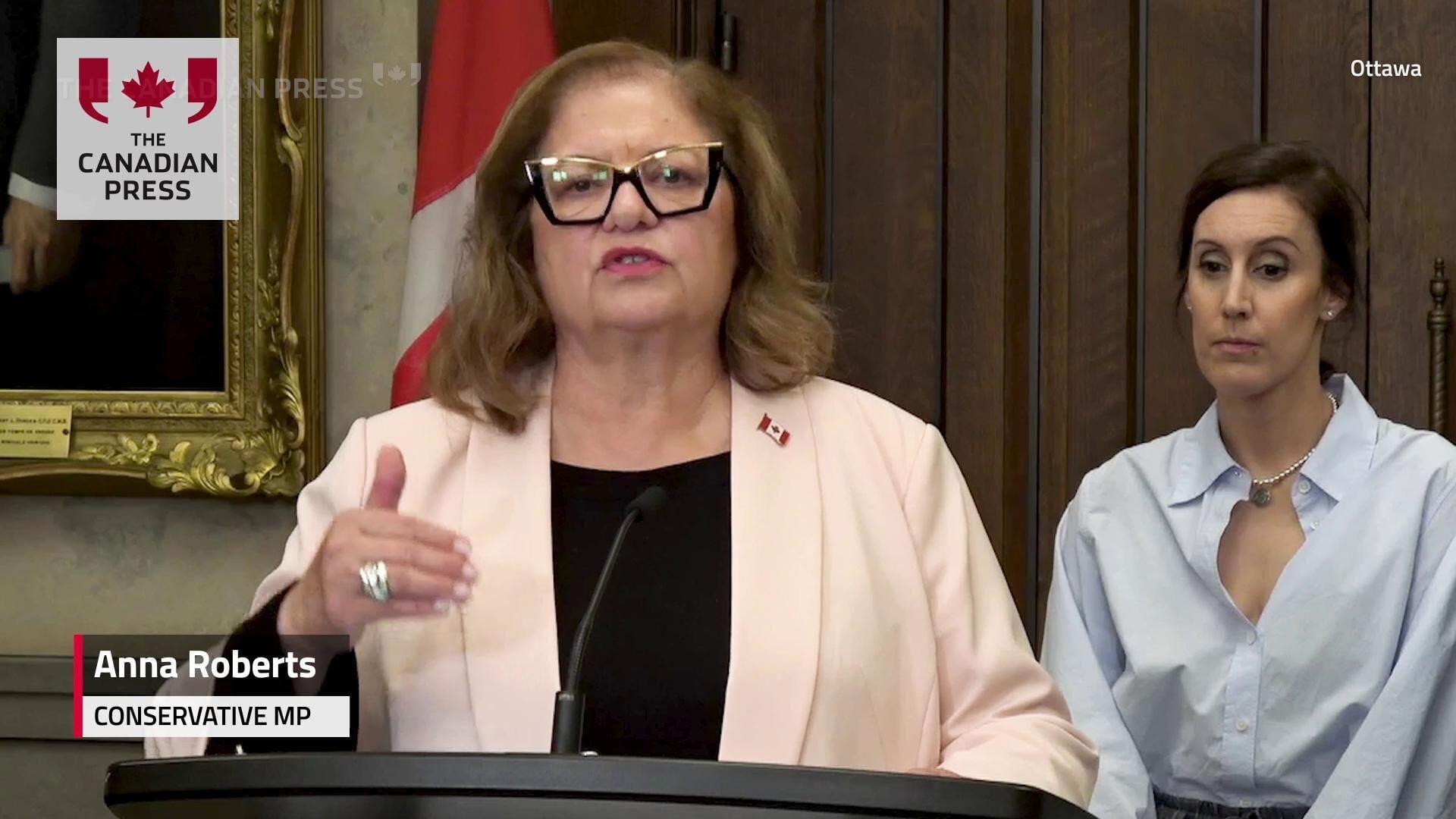 |
Feminist politicians urge more government funding to oppose the antifeminist “manosphere”
It’s difficult to be surprised by last month’s Report of the Standing Committee on the Status of Women, entitled “Confronting Antifeminist Ideologies in Canada”—but it is nonetheless remarkable that such tone-deaf anti-male pap continues to preoccupy the Canadian federal government.
The Standing Committee on the Status of Women is the bureaucratic arm of Canada’s radical feminist movement. Its grip on power, consolidated in 1991 with The War Against Women, produced after the Montreal Massacre, is now essentially unchallenged. The Committee is made up of feminist Members of Parliament who consult with feminist academics, organizers, and advocates to advise the Canadian government on its gender policies.
The title of the Report, “Confronting Antifeminist Ideologies in Canada,” tabled in June of 2026, suggests that the focus will be on intellectual engagement with antifeminist ideas, but that is the last thing actually proposed. Rather than “confronting,” the title might more accurately have read “fearmongering about …”, “deliberately mischaracterizing …” or—perhaps most accurately—“suppressing … (with government funding and state enforcement).”
So terrified is this Committee, it seems, of the legitimate skepticism, rancor, and distrust that feminist ideology and its gender-fascist policies have provoked that the Report can neither say what antifeminism truly is nor explain why it may be on the rise. Committee members can say only that it is “shaping public discourse in harmful ways.”
Antifeminism, the Belief that Men Are Human
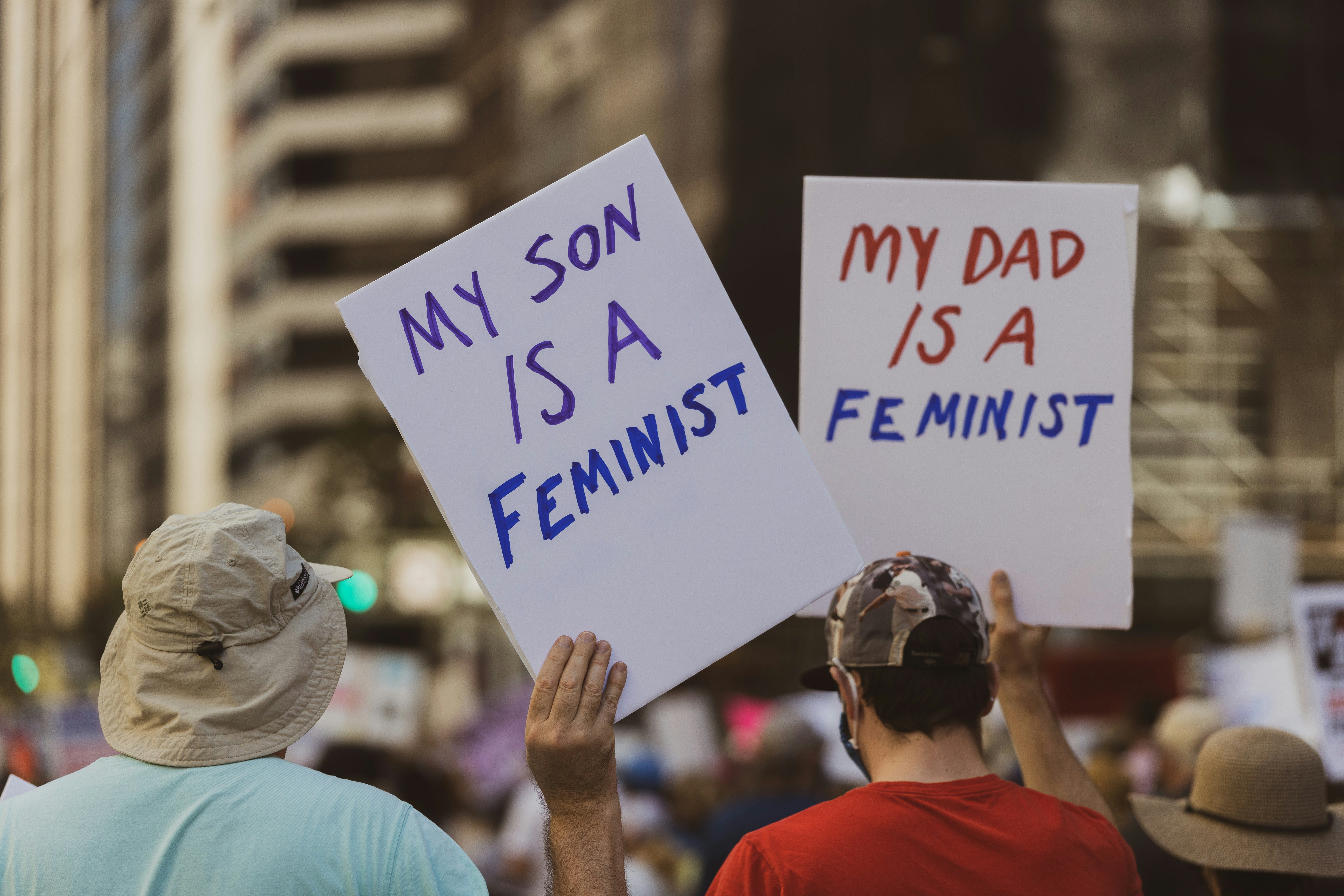 |
The report begins with reductive definitions. Antifeminism is “an extremist ideology based on gender.” “An antifeminist is someone who is against equality between men and women and the social progress that has been made.” Antifeminism is a “regressive” ideology “aimed at undoing gains made on women’s rights” and “blocking further change needed for the full realization of equality.”
The dishonesty of such statements should be obvious to anyone who has thought seriously about men’s lives today or about the truly extremist ideology that defines men as perpetrators and women as innocent victims. Beginning with such saccharine obfuscations, the Report ignores the obvious reasons why some men are antifeminist, reasons that include feminism’s repeated falsehoods, bigotry, female supremacism, anti-western animus, injustice, hatred, fanaticism, and incitement to violence, to name a few.
We could start with the obvious, the popular feminist slogan “A woman needs a man like a fish needs a bicycle.” What did feminists expect men to conclude from that? They said they didn’t need men; it’s a bit late now to express dismay that many men aren’t interested in their revolution.
But are men really the problem? A recent survey of young people claims that while nearly three-quarters of young men reported a positive or very positive view of women, only one-third of women under 25 reported a positive view of men.
When four high-profile feminist pundits agreed in 2013 to debate the proposition “Be it resolved: men are obsolete” (with only one of the pundits, Camille Paglia, seriously defending the negative), how did feminists think men would react? These were not slick “manosphere” grifters universally loathed by respectable society. These were “respectable society”—authorities, opinion-makers, authors—discussing with repugnant giggles and a lot of feminist chutzpah whether men as a group were still useful in the modern world.
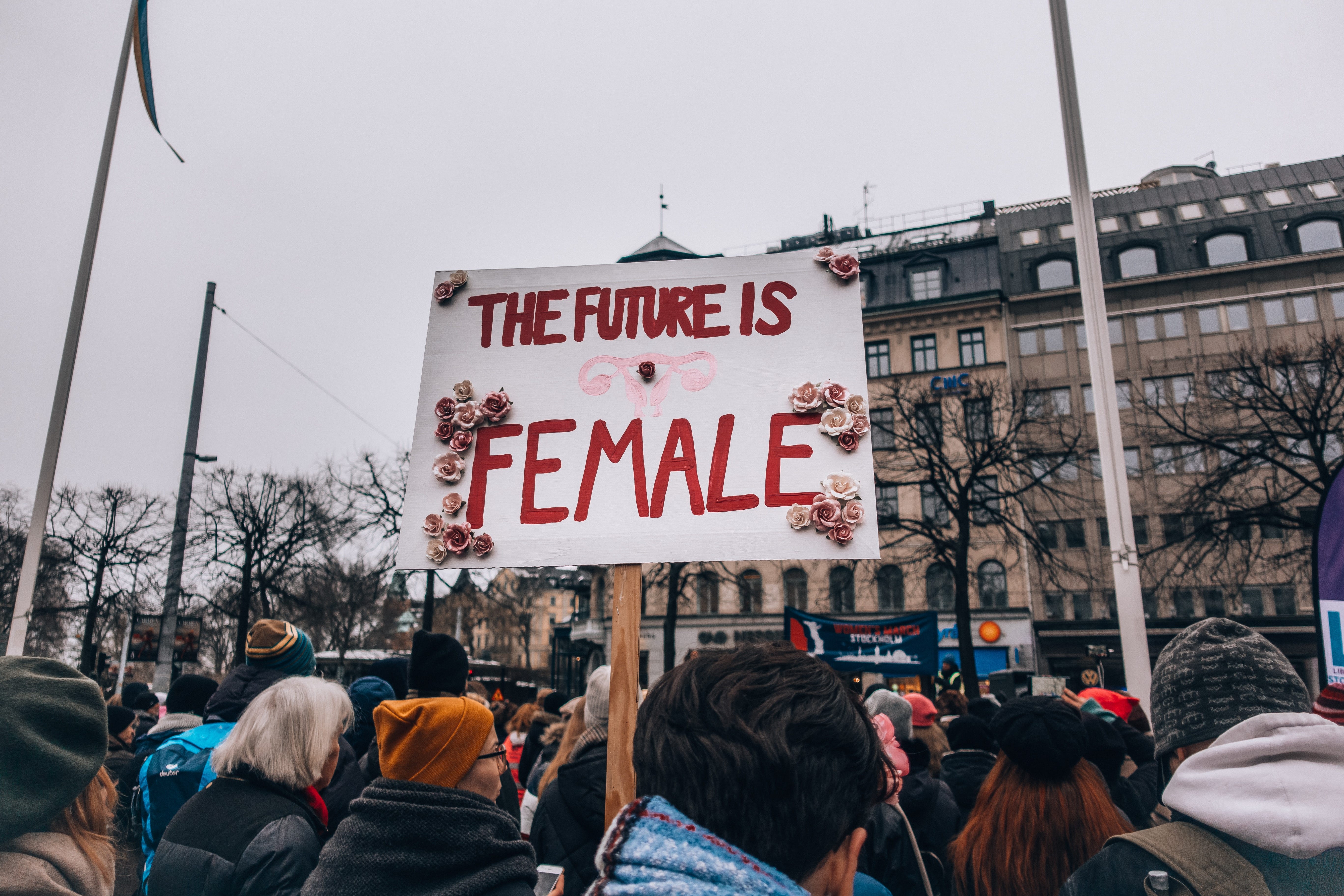 |
The oft-repeated slogan “The Future is Female,” which every North American boy has surely heard dozens of times, conveyed the message that the time of men was over, that they had better shut up, step aside, and accept their nonentity. Professor Suzanna Walters blatantly said as much in 2018.
Do feminist pundits really think that men don’t notice the contempt and disdain directed at them—in movies, advertising, academia, politics, the online dating world—and that their moral sensibilities aren’t revolted when, for example, feminist journalist Clementine Ford tweeted that Covid-19 wasn’t killing men fast enough, or when feminist author Mona Eltahawy boasted publicly (and received warm congratulations) about beating a man who allegedly touched her bum in a nightclub?
When feminists approve the dismantling of men’s due process protections, openly discriminate against fathers in family courts, and publicly jubilate about, or at least condone and rationalize, men’s murder and sexual mutilation, are they arrogant enough to think that men don’t understand their intentions?
Do they think that endless talk about toxic masculinity and male privilege, while they ignore women’s violence and cruelty, won’t alert at least some men to feminism’s hypocrisy and double standards?
The wonder is not that some men are antifeminist but that any man at all would accept the non-stop shaming and denigration that feminism involves.
Now, feminists are upset that young men are not enthusiastic proponents of yet more decades of female advancement. Men have been told countless times, and again in this report, that “gender equality” will benefit everyone, but they can’t help but see that it is code for female supremacy in all the good jobs and coveted social roles—with endless cheerleading and self-congratulation—while men continue to do the world’s dirtiest and most dangerous work, almost entirely without thanks or even recognition.
“Confronting Antifeminist Ideologies in Canada” attempts once again to make the case that male disgruntlement, where it exists, is a vast misunderstanding having nothing to do with feminism: that all along feminism has been a righteous movement, and that bad men who lurk in the shadows of the internet, exploiting the youth and lying about women, are responsible for the misperception.
Antifeminism as the “gateway to violence”
The Report uses a standard feminist tactic to discredit antifeminism: everything not feminist, no matter how harmless or defensible—or TRUE—is linked with violence against women, even if it simply involves men looking online for dating advice, workout techniques, or tips for business success. A young man who pays an OnlyFans model is assumed to have embarked down a woman-hating path, as is one who dreams of owning a luxury Bugatti in order to impress a woman. The normal interests of men are made sinister by being associated with power, dominance, and control.
Why men should not seek power in their lives, should not pursue what they want, is never broached in the Report.
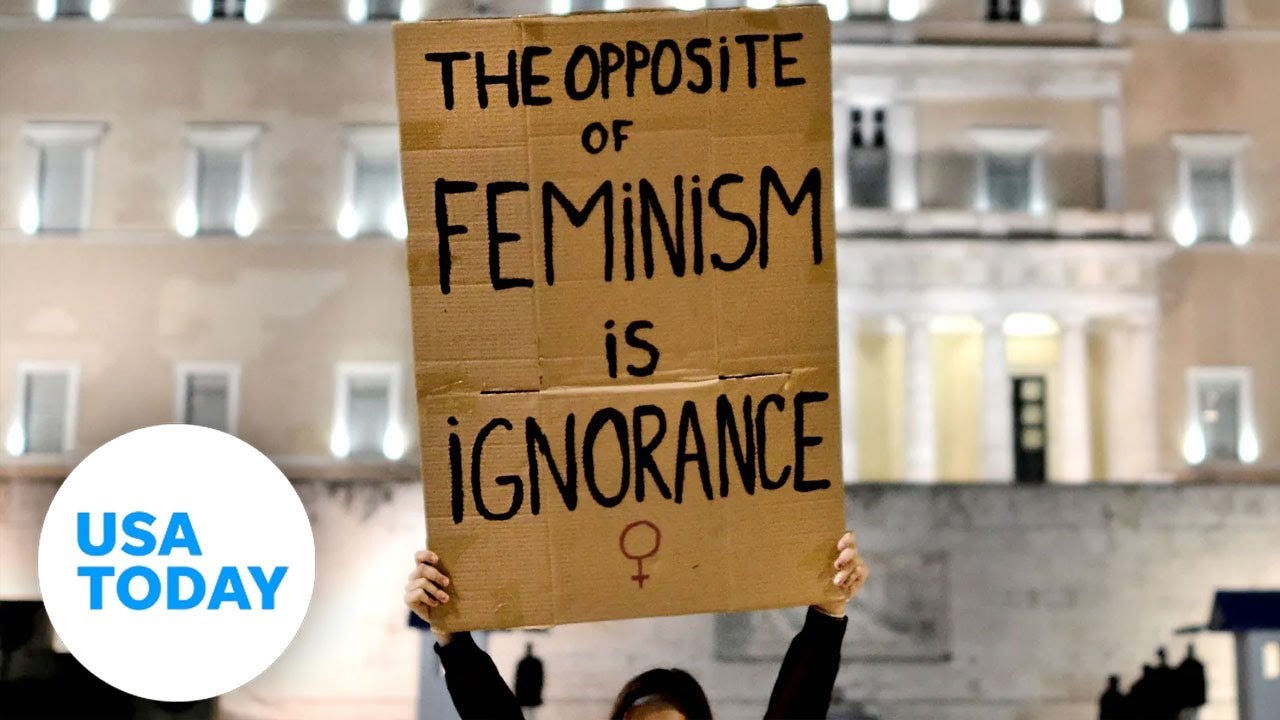 |
Even commonsense beliefs are tainted by association. The Report provides a list of what it calls “myths about gender equality” allegedly spread by antifeminists. These include that “gender equality has been achieved,” which is presented alongside the belief that “women should be subordinate or ‘deserve to be violated’”—all lumped together as if they form a unified antifeminist belief system. Apparently it is also antifeminist (and somehow misogynistic) to believe in “gender symmetry in violence,” a research finding well-documented by academics Murray Strauss and Don Dutton. That 30% of surveyed young people agreed with the statement “Feminism is a strategy to control society” is offered as an alarming indicator of male intransigence.
At times, the report’s claims are absurdly alarmist, as in the following paragraph:
The committee heard that antifeminist ideologies contribute to disinformation and misinformation about gender-based violence and are linked to increased levels of violence, including femicide; that “antifeminist ideology is not simply rhetoric, it is a gateway to violence.” Carignan further added: “Communities in the manosphere promote narratives that are sometimes very hateful and violent, and can lead to rape, suicide, murder, increased intolerance, a deterioration of togetherness and acts of terrorism. Kanojia noted that isolation within these communities “becomes reinforced,” making individuals more susceptible to harmful narratives where there are “no contrary perspectives.”
In offering such a jumble of sweeping assertions, unverified and unverifiable, the Report has obviously left the realm of sober analysis altogether, with the phrases “contribute to,” “are linked to,” and “can lead to” doing a great deal of rhetorical heavy-lifting.
Notably, the last section of the Report admits that its repeated assertions about antifeminist “harms” are without foundation. It quotes testimony acknowledging that “‘Significant data gaps make it hard to grasp the full scale of online hate, harassment, and radicalization.” Experts admit that “Canada lacks data on what types and how much antifeminist content occurs online, as well as how these beliefs translate into violence.” Notice the question-begging in that last clause: antifeminist beliefs “translate into violence,” despite the fact that no one can say how.
In plain English, the above statements are an admission that much of the Report’s verbiage is little more than anti-male grandstanding. Still, just a few pages later, the authors stress “the dangers that antifeminist rhetoric poses to everyone in Canada” and call for government action “to prevent further harm caused by antifeminism” (further harm where no harm has yet been shown).
In more than forty pages of expert opinion, not one person is on record defending freedom of expression or association. Not one person cautions that the federal government should not be involving itself in micro-managing men’s personal beliefs. Not one expert observes that having online spaces where men can discuss their problems, criticize feminist extremism, and express anger at (and yes, even hatred of) women and women’s behavior contributes to social and individual health, and is the hallmark of a free society.
Climate change-induced antifeminism?
Naturally, the report blames everything but feminism for the alleged rise in antifeminism.
“Many young men are feeling anxious,” one academic offers, “both because we’re in a climate crisis and in an economic crisis and also because they don’t necessarily have community; they think they have to bear that by themselves.” Here is a word-perfect feminist evasion that not only engages in environmental catastrophizing but also makes the familiar criticism of men’s social retardation. If they could only learn to cry with others, so this thinking goes, they might come to accept their emasculation.
Other experts identified “social isolation, a lack of meaningful community, and mental health challenges” as well as pornography, online subcultures, “social deprivation, emotional illiteracy, trauma histories, and unmet mental health needs”—an amorphous assortment of villains.
But lest any of the descriptions take the focus away from female victimhood, the section ended with a sternly pointed finger:
“Dupuis-Déri underscored the importance of men and boys taking accountability for their actions, noting that while they may experience significant challenges, women are not at fault nor the cause of their problems, contrary to narratives promoted within antifeminist movements.”
There it is: women are not at fault (even when they are violent, lying, abusive, murderous criminals).
For the men tired of hearing about all the ways they fall short, tired of being told to man up and step aside, tired of losing out in job competitions—or not even getting a look in—because of explicit or unwritten equity protocols, it’s a repugnant dose of feminist claptrap.
For the men falsely accused, harassed, bullied or beaten, for sons of abusive mothers or fathers exiled from their children’s lives, it is not only untrue but yet another mockery of justice.
Men who don’t like feminism will be given more feminism
Predictably, the Report recommends more feminism to combat antifeminism: more money for feminist organizations to purvey their propaganda, more money for taxpayer-funded media to present feminism disguised as objective reporting, more preferential hiring to get even more women into positions of influence that they didn’t earn, gender equity mandates for political parties to get more women into politics, more training for girls for economic advancement, and more stringent censorship to prevent antifeminist speech.
The likelihood that these measures, especially the further feminization of news reporting, politics, and public messaging, will confirm men’s perception that the culture is slanted against them is, of course, not a concern for the Committee.
 |
But the Committee is concerned about feminism’s loss of narrative authority. One expert contended that “Without well-resourced media capable of ‘addressing substantive issues by finding the right experts and explaining the issues clearly to the public,’ Canadians increasingly turn to non-news sources on social media for information.” One could not ask for a clearer encapsulation of elitist contempt for the public and determination to do more of what has turned people off.
Another expert worried that the news is not yet propagandistic enough, alleging that “media coverage may perpetuate antifeminist views framed as ‘neutrality’” and advocating “accurate, survivor-centered, and gender-equitable coverage.” Another expert “echoed that journalists also require training to enable them to cover these issues more effectively.”
Recommended online “safety” (censorship) measures include removing user anonymity, penalizing platforms that fail to censor, removing content that promotes “disinformation,” enabling users to report “harmful content,” and mandating quicker response times for removal of “harmful” content.
Experts also emphasized the importance of preparing young people to confront the online world by “equipping [them] with the critical skills to identify what is misinformation and what isn’t.” “Overall, critical thinking and media awareness are important,” noted another expert.”
This call to media literacy comes in a Report, as I’ve tried to show, filled to the proverbial brim with inaccurate definitions, flabby generalizations, false equivalencies, non sequiturs, and outright falsehoods. The Report repeatedly advocates “engaging men and boys in advancing gender equality,” by which it really means persuading men and boys to ignore their own perceptions and experiences in order to pretend that only women’s (official) desires and demands matter.
For any of the ideologues involved in this Report to nominate themselves the guardians of critical thinking—all the while plotting how to shut down and punish their opponents, whose arguments they don’t even show themselves able to comprehend or logically counter—is the height of hypocrisy.
“Confronting Antifeminist Ideologies” is a good example of late-stage feminist dominance. It demonstrates how feminist power has enabled significant consolidation of resources—Canada’s federal government is now unashamedly partisan in its funding structure—while at the same time contributing to its intellectual arrogance and incoherence.
Hidebound, lacking in vigor, and perennially on the defensive, feminism can now do little more than call its adversaries bad names and appeal to Big Daddy government to shore up its brittle might. The academics, policy advisors, think tank leaders, advocates, and government employees featured in the Report rely on pompous feminist clichés and shop-worn fearmongering to bolster their positions. But their misdirection and accusations begin to look like a rear-guard action against a public that has for some time and with good reason stopped listening.