Secret deal: How trans lobby titan ACON was hired to train Family Court judges
 The Australian
Secret deal: How trans lobby titan ACON was hired to train Family Court judges
Stephen Rice NSW EDITOR
Listen to this article
15 min
The Federal Circuit and Family Court of Australia quietly hired the nation’s most powerful transgender lobby group, ACON, to train its judges and clinical child experts. Pictures: iStock
The Federal Circuit and Family Court of Australia quietly hired the nation’s most powerful transgender lobby group, ACON, to train its judges and clinical child experts. Pictures: iStock
Gift this article
150 Comments
prefer google Make us preferred on Google
10 hours ago.
Updated 9 hours ago
The Family Court paid trans activist powerhouse ACON to train 122 judges and more than 1000 staff in “allyship”, then fought to keep details of the course hidden from the public as a “commercial product”.
The Federal Circuit and Family Court of Australia, which frequently deals with disputed questions of sex, gender identity and parental rights, quietly hired the nation’s most powerful transgender lobby group to train its judges and clinical child experts
Documents obtained under Freedom of Information reveal the Federal Court of Australia, acting as the corporate entity for the commonwealth, signed a $36,575 contract with ACON Health in June 2024 to develop “co-branded” LGBTIQA+ training for judges and staff of the FCFCOA.
Six months later, the court extended the deal for another full year until the end of 2025. The stated learning outcomes include “an understanding of LGBTIQA+ allyship and the practical actions that can be taken by allies”.
The contract envisaged “a suite of innovative, expert-led and customised training programs”, and committed the court to supplying resources and personnel for “in-person training delivery” and “co-facilitation of leadership and consolidation training sessions”.
The court’s FOI officer claimed “ACON did not run any training sessions for the courts” but produced three online modules.
The contract reveals the arrangement was described as having “potential for extension to other jurisdictions within the Federal Court of Australia entity”.
In an extraordinary development late on Friday, the Federal Court of Australia refused to answer questions about its role in seeking the ACON contract, despite earlier agreeing to do so.
The Australian had asked whether the Federal Court had employed or contracted any outside body to provide training services and/or professional development for judges and staff in relation to working with LGBTIQA+ people and, if so, to provide details.
However, three hours after the deadline, the court issued a single-sentence statement: “The entity does not have any comment to your questions.”
The FOI was lodged by Women’s Forum Australia head of advocacy Stephanie Bastiaan, who had asked to see what the FCFCOA judges were actually being taught. The court refused to release the training course or a 12-page tender evaluation report explaining why ACON won the contract.
“This is what ideological capture of our institutions looks like. Judges are not meant to be allies of any cause. They are meant to be impartial arbiters of the law,” WFA chief executive Rachael Wong told The Australian. “The idea that judges should be trained in ‘allyship’ on contested questions of sex and gender identity should set alarm bells ringing.”
 Women’s Forum Australia head of advocacy Stephanie Bastiaan. Picture: Eleni Tzanos
Women’s Forum chief executive Rachael Wong.
Women’s Forum chief executive Rachael Wong.
“Every woman defending a female-only service and every parent concerned about medical gender interventions for their child deserves to know their case will be decided on the evidence and the law, not through the framework of an activist organisation,” Ms Wong said.
Not so neutral
In winning the lucrative contract, ACON assured the court of its neutrality. “The supplier has declared that it has no conflicts of interest relevant to the performance of its obligations under this contract,” the contract states.
In reality, ACON is anything but a disinterested educator.
As The Australian revealed last year, the former AIDS Council of NSW has reinvented itself with $20m in annual state taxpayer funding into Australia’s foremost trans rights lobbying machine.
With tens of millions of dollars more in federal grants and private contracts, ACON has effectively co-opted every arm of the state, from classrooms to courtrooms, to enforce its dogma that self-determined gender trumps biological sex.
Through its TransHub portal, ACON actively promotes puberty blockers, cross-sex hormones, and surgery for young people, claiming medical interventions “are not only medically necessary, but life-saving”, while omitting any hint of growing international medical and legal disputes over puberty suppression.
ACON has successfully lobbied MPs for birth certificate self-ID, against conversion practices and religious exemptions, and helped ban women-only spaces that exclude biological males.
Critically, the FCFCOA sits in judgment over several of these battlegrounds.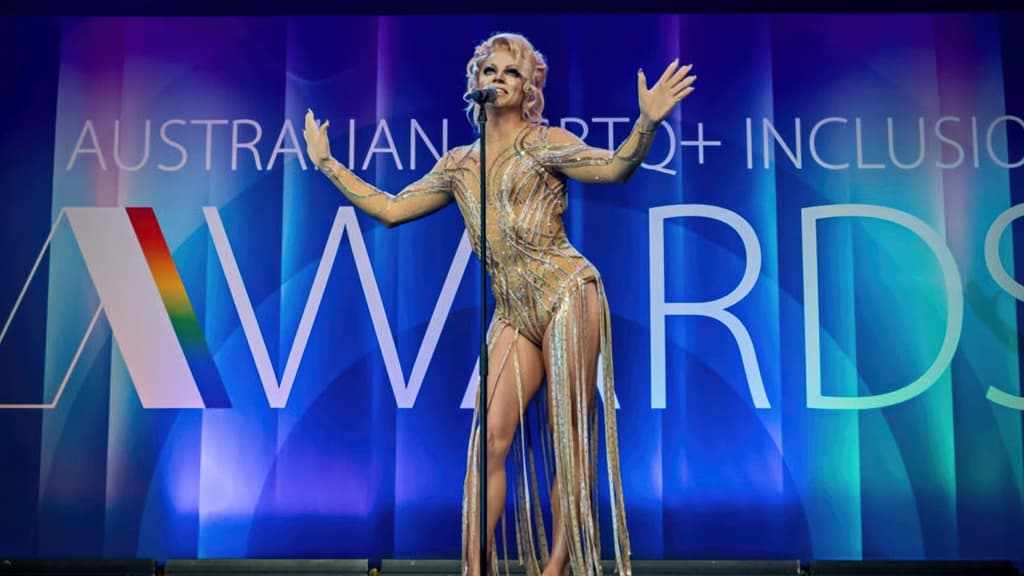
ACON’s 2025 Australian LGBTQ+ Inclusion Awards.
ACON’s 2025 Australian LGBTQ+ Inclusion Awards.
In its Family Law Division, FCFCOA judges preside over bitter parenting wars in which mothers and fathers clash over whether a child should be diagnosed with gender dysphoria and placed on puberty blockers or cross-sex hormones.
This week, lawyers pointed to decisions of the court as crucial in the implementation of new National Health and Medical Research Council guidelines regarding puberty blockers for children.
In January 2025, in the Morgan case, Justice Mark Anderson declared a teenager competent to begin stage two cross-sex hormones, granted the mother sole parental responsibility, and approved a legal name change – after the father had opposed the application on religious grounds before conceding the diagnosis and competence during closing submissions.
In a rare challenge to gender ideology just a few months later, in the Devin case, Justice Andrew Strum rejected a mother’s bid to put her 12-year-old child on stage one puberty blockers, granting sole parental responsibility to the father and noting that the widely cited “Australian Standards” for trans youth “do not have the approval or imprimatur of the commonwealth or any state or territory government”.
“Ideology has no place in the application by courts of the law,” Justice Strum, who also drew on Britain’s Cass Report in his reasoning, said.
“This is a case about a child, and a relatively young one at that; not one about the cause of transgender people.”
Extreme prejudice
Children’s medical cases are not the only flashpoint. The FCFCOA also hears parenting disputes involving transitioning adults, workplace gender identity claims under the Fair Work Act, protection visa judicial reviews involving transgender applicants, and the court’s Division 2 can hear federal Sex Discrimination Act suits after termination of a complaint to the Australian Human Rights Commission.
Indeed, the landmark Tickle v Giggle discrimination suit, brought by transgender woman Roxanne Tickle against women-only app founder Sall Grover, was originally commenced in the FCFCOA in June 2022 before refiling in the Federal Court six months later.
As The Australian reported, Ms Tickle was photographed days before launching the complaint alongside then ACON director Teddy Cook, the architect of TransHub, who later moved to Equality Australia as it intervened in the Tickle case as a “friend of the court”.
Social media post showing Roxanne Tickle with then ACON director Teddy Cook
Social media post showing Roxanne Tickle with then ACON director Teddy Cook
“The conflict of interest is glaring, yet ACON formally declared it had none,” Ms Wong said. “Why was an organisation that campaigns on these issues engaged to develop training for the very judges who must decide them? What independent safeguards ensured the training would not prejudice judicial decision-making?
“Just as troubling is the lack of transparency. The training materials have been withheld from the public, despite $36,575 of public money being spent on the contract. Australians are being denied the chance to see what judicial officers in their own courts were taught.”
Redactions, $315 bill
The courts’ FOI response reads like a textbook exercise in stonewalling.
The WFA request sought basic administrative facts: the dates, topics, costs and attendee categories of ACON’s training, plus the reasons the court used a limited tender rather than an open market process.
That included “any conflict-of-interest or probity declarations made by officers involved in the procurement decision”.
Astonishingly, searches across the entire court system uncovered just nine relevant documents. None contained attendance or completion figures, conflict-of-interest declarations or any justification for using a limited tender.
The contract required ACON to deliver three formal progress reports but none of those records appeared in the released file.
After charging Ms Bastiaan $315 for 20 hours of work in “processing” the nine files, the court refused two key documents outright, deferred release of two others to give ACON and rival bidder Rainbow Health Australia time to seek review, and blacked out swaths of the remaining records.
Ms Tickle and Giggle for Girls app founder Sall Grover.
Ms Tickle and Giggle for Girls app founder Sall Grover.
The contents of the training course remain secret, withheld because it would “unreasonably affect the business, commercial or financial affairs of ACON by essentially publicly releasing a commercial product developed by ACON”.
Why ACON was asked to tender – and why it won the limited tender against rival Rainbow Health – is also still secret. So too are “detailed examples of previous training programs developed for third parties”, thus concealing which other institutions both organisations cited to win the court over.
Pricing details are blacked out, leaving visible only the $36,575 total paid.
Remarkably, the FOI decision-maker conceded the strength of the public interest case against secrecy.
“I am also satisfied that access to the documents, with the exception of personal information contained within the documents, would inform debate on a matter of public importance, being the training provided to judges and staff of the courts to support them in their roles; and would promote effective oversight of public expenditure,” the decision-maker wrote.
But she ruled that protecting ACON’s commercial product and ensuring future tenderers do not become “hesitant to tender for similar projects” outweighed the public’s right to know.
‘Allyship’
The documents as released nevertheless expose how deeply ACON was invited inside the courts’ machinery.
In May 2024, the court sought a supplier to create an online course tailored for 122 judges alongside 150 registrars exercising delegated judicial power, 120 court child experts – the psychologists and social workers who advise judges on children’s welfare – 10 triage counsellors, 224 judge’s associates, and hundreds of registry and operations staff, expanding the target cohort from roughly 800 in the request for quote to 1030 staff in the final contract.
The documents do not establish how many judges or staff actually completed the course, and the court refused to tell The Australian.
In a written statement, a court spokesperson said: “The courts have not engaged ACON to advocate, nor has it adopted ACON’s policy positions. There is no basis to suggest it has compromised the courts’ independence.
“The courts are committed to ensuring accessibility and inclusivity for court users and employees.
“ACON was selected as the preferred tenderer to provide LGBTIQA+ training through a procurement process conducted in accordance with the Commonwealth Procurement Rules.”
The online training modules “covered training on how best to deal with LGBTIQA+ communities and diverse families in legal proceedings, barriers they can face in the legal system, and practical ways to interact inclusively with court users”, the spokesperson said.
Federal Circuit and Family Court of Australia chief justice William Alstergren. alt=”” width=”1024″ height=”576″ class=”alignnone size-full wp-image-9762″ />
Federal Circuit and Family Court of Australia chief justice William Alstergren.
Among multiple questions the court declined to answer:
■ Given ACON’s radical activist and lobbying activities, what due diligence did the court undertake to assess potential or perceived conflicts of interest before approving the contract?
■ Has the court received any internal feedback or formal complaints from judges, staff or court users regarding the training or procurement?
■ How does the court ensure that training co-designed with an external advocacy organisation – which explicitly covers “practical actions that can be taken by allies” – does not compromise judicial impartiality or create a perception of bias in cases involving disputed questions of sex, gender identity or parental rights?
■ Does Chief Justice William Alstergren accept that the award of this contract to ACON could create a perception of bias and thus undermine public confidence in the judicial system?
‘Co-branding’
The contract documents reveal that judges and staff were to be taught to distinguish between sex characteristics and gender identity, “utilise inclusive language and appropriate terminology”, and “demonstrate an understanding of LGBTIQA+ allyship and the practical actions that can be taken by allies”.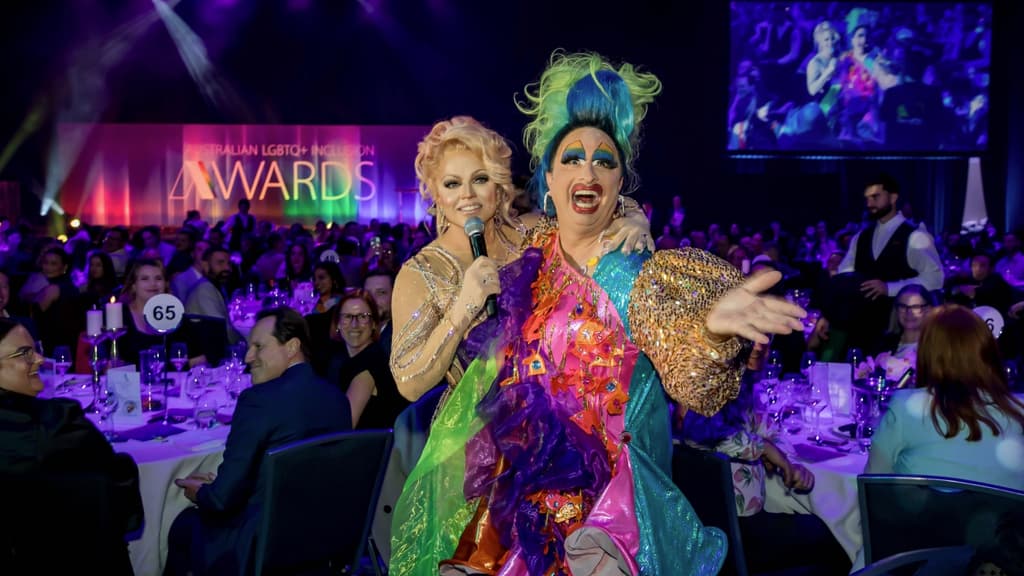
Under the contract, ACON’s modules had to be “co-branded” with the court and incorporate “references to the organisation’s policies and procedures where relevant”.
ACON’s 2025 Australian LGBTQ+ Inclusion Awards.
ACON’s 2025 Australian LGBTQ+ Inclusion Awards.
The contract itself contradicts the court’s claim that disclosing the course materials would mean “essentially publicly releasing a commercial product developed by ACON”.
The contract states the court “owns the intellectual property rights in the material created under this contract” and expressly authorises “releasing the material to the public under an open access licence”.
“The Federal Court owns the material created for the course,” Ms Wong said. “It should immediately release the full training materials, disclose which judges completed the course, and confirm whether it has been rolled out in the Federal Court itself.”
Both ACON and the court refused to provide any of the training materials to The Australian.
Same playbook
For observers who have tracked ACON’s march through Australian public life, the FCFCOA’s secrecy follows a familiar script.
This masthead has detailed how ACON’s Pride in Diversity program and Australian Workplace Equality Index signed up more than 500 employers covering 25 per cent of the national workforce – including ASIO, ASIS, the Australian Federal Police, the ABC, and Prime Minister and Cabinet.
When The Australian sought AWEI records under FOI, ACON fought back using the same commercial secrecy arguments now echoed by the court – claiming disclosure would undermine its ability “to operate as a sustainable business”.
Asked to respond to the new revelations about its contract with the court, an ACON spokesperson said it “offered professional services, including assistance creating training, to organisations wishing to make their services more inclusive”.
“The Federal Court engaged ACON to help develop training for court personnel on working with people from the LGBTIQA community. At no time has ACON provided advice on the exercise of judicial powers.”
ACON did not respond to a specific question asking whether, given its role in lobbying for laws and rights that may come before the court for consideration, it declared any conflict of interest or informed the court of its advocacy work.
Earlier this year the ABC abandoned its partnership with ACON following revelations by The Australian that the broadcaster’s news and programming had been heavily influenced by the radical agenda of the lobby group.
Ms Wong says the Family Court, too, must now reckon with its role in facilitating ACON’s agenda.
“The court must explain what safeguards were put in place to protect judicial independence,” she told The Australian. “Litigants whose cases have been heard since the training began deserve those answers. Nothing less will restore confidence in this process.”
If you know more: stephenrice1@protonmail.com